

Quick Summary
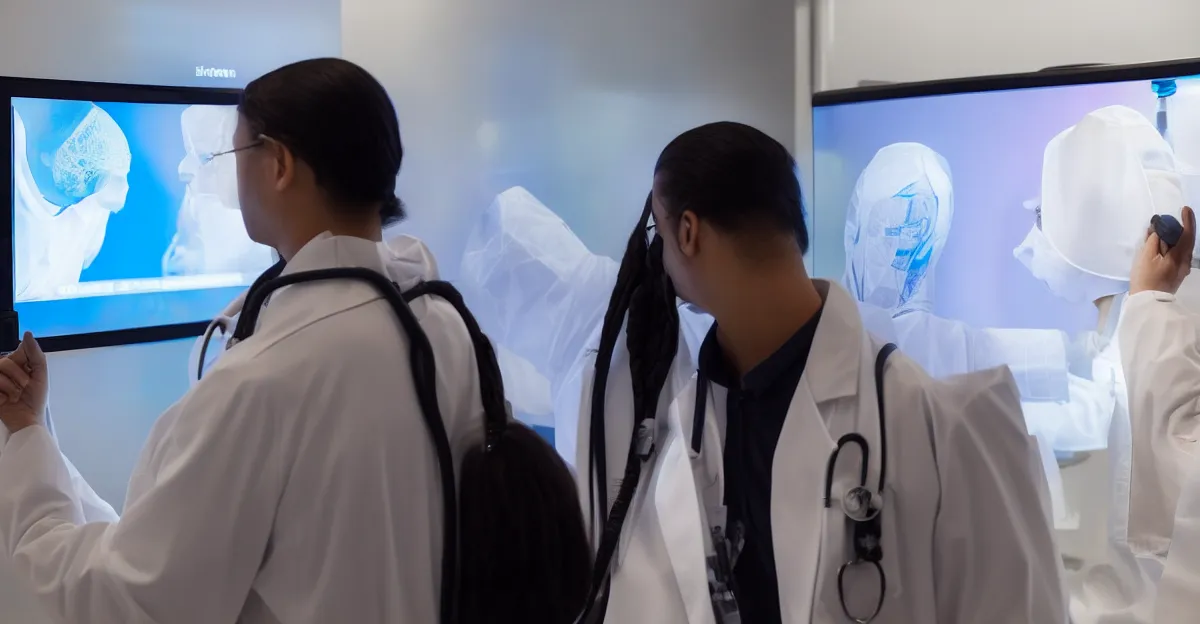
Artificial Intelligence, or AI, is changing how doctors treat patients all over the world. It is not just robots in movies anymore; it is a powerful tool helping diagnose diseases much earlier than before. AI algorithms can look at X-rays and scans much faster than the human eye, finding tiny problems that might be missed. This technology helps doctors make quicker and more accurate treatment plans for serious illnesses like cancer or retina disease. For us in Nepal, understanding AI means we can bring better healthcare closer to home.
AI in Healthcare: How Artificial Intelligence Is Saving Lives
Namaste, friends of KhulaPost. I hope you are doing well and keeping up with all the amazing technology happening around us. We often hear about Artificial Intelligence, or AI, and it sounds like something from a science fiction movie. Like those robots that take over the world, perhaps. But I want to tell you today that AI is much calmer and much more helpful than that.
AI is actually becoming one of the most important allies in our healthcare journey. It is quietly changing how doctors work and how we receive treatment. If you have ever wondered if technology can truly help cure a serious illness, the answer is yes. And AI is leading that charge.
Why Does This Topic Matter to Us in Nepal?
When we talk about healthcare, especially here in Nepal, we have to be very honest about the challenges. Getting specialized medical care often means a long journey, sometimes even going abroad. High-quality diagnostics and experienced specialists are not always available in every village or town.
AI offers a potential equalizer in this tough situation. It brings powerful computing abilities into devices that can be used anywhere, including community health posts or even a doctor’s laptop at home. This allows us to bring world-class diagnostic assistance into local settings.
Think about the sheer volume of medical information generated today. Every patient scan, every blood test result, every symptom description is data. Humans cannot possibly process all of this information as quickly or accurately as a well-trained AI system can. This is where the partnership between human doctors and machine intelligence becomes priceless.
What Does This Mean for You, the Patient?
If you are a patient, you need to know that AI is not coming to replace your doctor. That idea sounds scary and it is incorrect. Instead, think of AI as an incredibly gifted assistant or a second pair of eyes that never gets tired. It takes the heavy lifting off your doctor’s shoulders, allowing them to focus on what only a human can do: providing comfort and making the final compassionate decision.
Let me explain some of the specific ways this technology is stepping into the clinic. These applications are already proving their worth globally, and they hold immense promise for us here too.
- Early Detection of Disease: AI is brilliant at pattern recognition. It can review X-rays, MRIs, and ultrasounds and flag abnormalities almost instantly. For example, it can detect microscopic signs of cancerous tumors much earlier than a human might during a busy shift. Early detection is truly the best chance for successful treatment.
- Drug Discovery Speed-up: Finding a new medicine is usually a decade-long, billion-dollar guessing game. AI speeds up this process tremendously. It simulates how different molecules might interact with a virus or disease target, drastically reducing the time needed to create potential cures.
- Personalized Treatment Plans: We all react differently to diseases, and our bodies are unique. AI analyzes your specific genetic data, lifestyle factors, and medical history. Then it suggests a treatment plan tailored exactly to your body’s needs, making treatments far more effective and side effect free.
- Surgical Assistance: In complex surgeries, robots guided by AI offer incredible precision. They can perform microsurgeries with tremors that are impossible for a human hand to match, making procedures less invasive and recovery quicker.
These examples show that AI is not just a theoretical idea. It is happening right now, helping people around the world breathe easier and live longer lives.
Practical Tips for Our Digital Age
So, as a Nepali reader trying to keep up with this fast-moving world, what can you do? You don’t need a coding degree to benefit from this technology. Your action is mostly about awareness and demanding quality care.
Here are a few simple thoughts on how we can engage with this digital health revolution:
- Be Curious About Your Diagnosis: When you go to the doctor, do not just accept a diagnosis without understanding it. Ask your doctor if any advanced imaging or testing was done. You have the right to ask questions about your health data.
- Digital Health Records are Gold: If possible, keep all your medical records digitized and organized. When you combine these with AI tools later on, it allows the system to build a perfect picture of your health journey.
- Think About Prevention: AI is excellent at predictive modeling. By tracking lifestyle habits, diet, and exercise data using apps or wearables, AI can warn you about potential health issues *before* they become serious. This is the biggest game changer.
- Support Local Tech Adoption: If you are part of a local community health group, encourage the introduction of vetted, safe technological aids. We must be open-minded about modern solutions while remaining cautious and thoughtful.
Technology is a tool. We are the ones who decide how and why we use it. Let us be wise users of this powerful new tool.
How Does This Affect Nepal Specifically?
This is perhaps the most important section for many of you. The leap from advanced global technology to local application can seem like a huge chasm. But the journey starts small, and those small steps add up to massive change.
Imagine a scenario in a remote hilly region where getting to a major city hospital is difficult. AI can bridge that gap. Telemedicine, powered by AI, makes this possible.
- AI-Aided Telemedicine: A local health worker, perhaps a trained community nurse, can use a tablet connected to an AI system. They take vital signs and images of a patient in the village. The AI helps flag urgent issues for immediate review by a specialist hundreds of kilometers away. This saves precious time and travel costs.
- Predictive Outbreak Monitoring: AI can monitor local environmental data, weather patterns, and even social media trends. If it detects unusual clusters of symptoms or animal disease movements, it can warn health officials about a potential outbreak much sooner than manual observation. This is life saving during epidemics.
- Low-Cost Diagnostics: Think about eye disease, like diabetic retinopathy, which is a huge problem in our country. Small AI-powered cameras can screen the retina in a primary health center. The AI flags severe issues, allowing for prompt referral and treatment before blindness sets in. This is affordable health on a mass scale.
These local applications do not require massive infrastructure changes overnight. They rely on smart integration, which is achievable if we start with a focused vision and local talent.
We must, as a society, invest in the human capacity to operate and maintain these AI tools. The hardware is only half the battle; the local knowledge, the human touch, is what truly matters.
Tools and Resources You Can Try Today
You might think these powerful tools are only for big research labs. But thankfully, there are ways to interact with the basics of this technology right now. You don’t need a clinic setting to see AI in action.
If you are interested in the concept, here are some places where AI is being applied freely or openly:
- AI Chatbots for Symptom Checking: Many reputable health apps use AI chatbots. While they cannot replace a doctor, they are excellent for initial symptom checking and guiding you whether you need urgent care or if it is something minor. Always follow up with a professional, though.
- Open-Source Medical Imaging Tools: Researchers globally are making AI models available for specific tasks, like aiding in simple bone fracture identification from X-rays. These datasets are fantastic learning resources for aspiring local medical professionals.
- Fitness Trackers with AI Insights: Your smartwatch is a small piece of medical tech. It uses algorithms to track sleep patterns, heart rate variability, and activity levels. These are basic forms of predictive health modeling that you can use to understand your body better.
These small interactions teach us about the potential and the limitations of AI. It teaches us that technology is a dialogue, not a monologue.
Final Thoughts on Our Shared Future
The partnership between human brilliance and artificial intelligence is here. It is not a future problem; it is a present reality unfolding in clinics around the globe, including here in Nepal. AI does not bring cold algorithms into our lives; it brings possibilities of early diagnosis, tailored treatment, and ultimately, hope.
We must approach this technology with both excitement and caution. We should embrace its power to diagnose and predict, but we must never forget the warmth, wisdom, and human heart of the doctor who stands beside you at the end of the journey. The machine offers data; the human offers healing.
Let us move forward together, embracing technology as a powerful friend that amplifies our best human qualities. Let us use this knowledge to build a healthier, smarter future for all of Nepal.
Follow KhulaPost.com for more tech tips and digital literacy guides.