
Quick Summary
Artificial intelligence is changing medicine, and this change is happening fast. Instead of scary robots taking over, AI acts like a super smart assistant to doctors everywhere. It helps find diseases much earlier than the human eye might spot them, especially in things like X-rays and scans. For us here in Nepal, this means better chances for early diagnosis even when resources are limited. AI doesn’t replace the doctor; it gives them superpowers to save lives.
AI Careko Hamilai Kasari Milcha? (How Do We Find AI Help?)
Technology is moving so quickly these days. Sometimes it feels like we are watching a movie that hasn’t started yet. But many big changes are happening right now, and one of the most important is in health care. We are talking about Artificial Intelligence, or AI.
Many people might hear the word “AI” and picture science fiction movies. They think of robots running around or maybe a machine that becomes too smart for humans to control. But in reality, AI is just really good computer programming. It is a tool that helps computers learn patterns and make decisions, kind of like how we learn from experience.
When we talk about AI in health care, we are not talking about a robot diagnosing cancer. We are talking about computer programs that have been fed millions of medical images or patient records. They can then spot tiny differences, patterns, and signs of trouble that might be too small for a tired human eye to see.
Think about it like this. If you have worked in a busy clinic, you know how much pressure doctors and nurses are under. They must be fast, accurate, and often they are managing too much information at once. AI is stepping in to reduce that mental load.
It takes those massive piles of information, like X-rays, blood test results, and patient histories, and it helps sort through them instantly. This speeds up the process and makes the diagnosis much more reliable.
AI Ko Medical Kura Haru Lai Samajhne Raastramano (Understanding AI in Medicine)
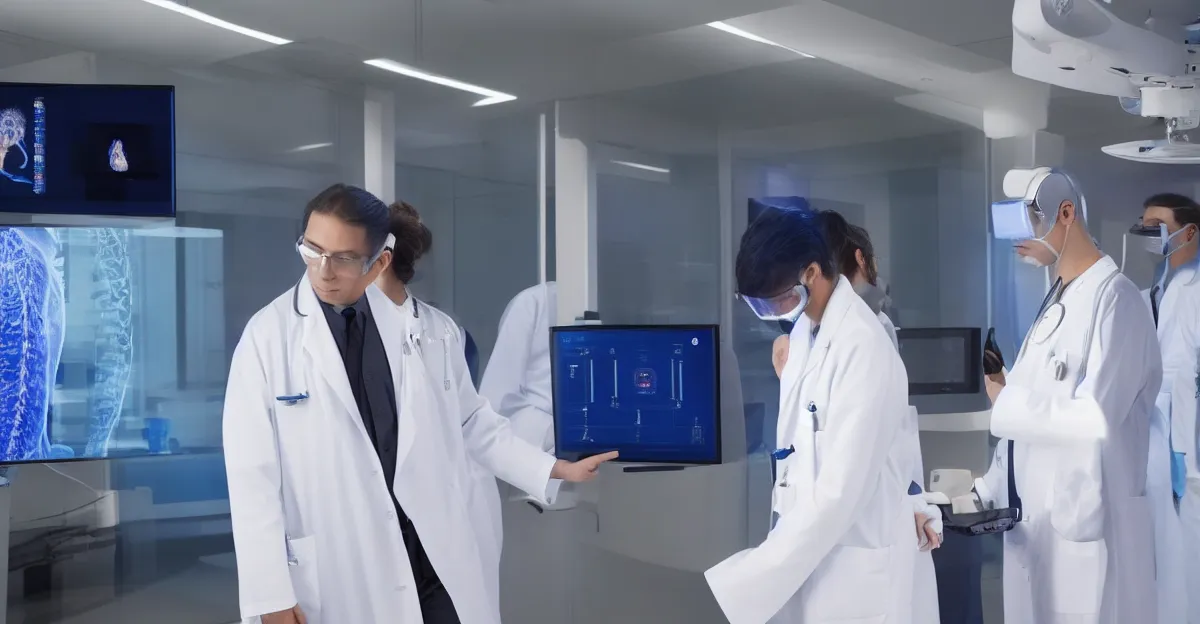
So, what exactly is AI doing inside the hospital walls? It sounds very complicated, but when we break it down, it becomes quite simple. AI is becoming a powerful assistant to the medical professional.
Let’s look at a few specific examples of how this technology is actually being used today.
- X-ray and MRI Analysis: AI models can analyze scans very quickly. They are trained on thousands of scans that already have diagnoses. When a new scan comes in, the AI can flag areas of concern like early signs of pneumonia or tiny growths. This helps radiologists check suspicious spots faster than ever before.
- Disease Prediction: AI can look at a patient’s data, including lifestyle habits, genetics, and recent symptoms. It might predict the risk of developing diabetes or heart disease many years before traditional methods could. This is massive because early warning allows for lifestyle changes that actually prevent the illness from becoming serious.
- Drug Discovery and Development: Finding a new medicine is usually a very long, expensive process. AI can simulate how different chemicals will react inside the body. It filters out bad ideas and quickly focuses researchers on the ones that have the highest chance of success, saving years in the lab.
It is like going from trying every single key on a keyboard until one works, to having the computer try them all and instantly tell you which ones are wrong. AI drastically narrows down the possibilities.
Yati Kura Hamro Lai Kasari Jaruri Chha? (How Is This Relevant to Us?)
When we think about AI, it can sometimes feel like a faraway technology only for rich countries with huge hospitals. But I promise you, this has massive implications right here in Nepal too. Our healthcare system faces unique challenges regarding geography, access, and specialist availability.
Imagine a patient living in a remote village, many hours away from the nearest specialist doctor. Getting to Kathmandu for a quick scan or consultation is often impossible, both physically and financially.
AI brings a powerful equalizer into this equation. Through mobile technology, those scans or symptoms can be uploaded to an AI system. The machine acts as the first line of expert defense, providing initial insights that are vital for triage.
- Bridging the Gap: AI allows a general practitioner in a small town to get a “second opinion” from an extremely sophisticated system, even if they don’t have the most advanced training themselves. This makes specialized knowledge accessible without needing to travel far.
- Preventing Progression: Since many serious illnesses, like certain cancers or eye diseases, are treatable in the early stages, AI’s ability to detect tiny changes is priceless. Early detection means less aggressive treatment and a much better chance of full recovery for the patient.
It is about transforming the care model from “sick care” to “preventive care.” We move from waiting until someone is critically ill to actively monitoring and maintaining health.
Hamro Pahadi Suruwar Ko Santulitata (Our Mountain Start and Balance)
For Nepal, adopting this technology means we are not needing to wait for Western medicine to reach us. We can use global AI tools and customize them to our specific needs.
Consider the sheer volume of data we could collect from our various regions. If we combine this localized patient data with powerful global AI algorithms, we can train models that are specifically tuned to the unique genetic traits and environmental exposures of Nepali people.
This is how we move beyond just being users of technology to becoming creators and beneficiaries of medical innovation. We start small, perhaps by using AI for screening in a local clinic, and slowly build up to complex predictive models.
- Telemedicine Enhancement: AI makes telemedicine truly effective. It doesn’t just allow a doctor to see a patient on a screen; it provides the AI analysis of that patient’s condition in real time. The remote doctor is no longer just chatting; they are having an informed, data-backed consultation.
This is especially vital in our mountainous terrain where physical distance often equates to life-threatening delays. AI compresses that distance into mere milliseconds of processing power.
Asha Ko Tools Ra Surochana (Tools and Resources to Consider)
You might be thinking, “Okay, this sounds amazing, but how do I see this in action right now?” You don’t need a million-dollar hospital setup to appreciate the potential. There are many ways AI is being used in its early stages that we can observe and support.
While you probably won’t be running a diagnostic AI model in your kitchen, understanding the applications is the first step to advocating for them in our local clinics and health camps.
- Open Source Medical Imaging AI: There are academic projects offering open-source models focused on common conditions like diabetic retinopathy. These systems often allow users to upload images and receive preliminary analysis, which is fantastic for training local health workers.
- AI-Powered Symptom Checkers: Many simple apps use AI to compare user input (symptoms, duration, location) against known medical databases. While these are not a substitute for a doctor, they are excellent tools for initial information gathering and deciding when immediate professional help is needed.
These tools help bridge the information gap. They allow the patient and even the general practitioner to gather context before they ever reach a specialist.
- Health Data Aggregators: Some platforms aggregate anonymized patient data from various locations. By looking at this big picture, AI can spot regional health trends or outbreaks much faster than manual record-keeping could manage. This is invaluable for public health planning in our country.
The key takeaway here is partnership. AI thrives when it has good, diverse data to learn from, and we in Nepal have a unique opportunity to provide that valuable local dataset while simultaneously benefiting from the global power of AI.
Aghi Ko Kura Aur Hamro Zimma (The Future and Our Responsibility)
We must approach this transformation with both excitement and caution. AI is a mirror, showing us our biggest strengths and also our deepest weaknesses in the system.
The most important thing to remember is that the human element remains sacred. AI is phenomenal at pattern recognition and data crunching, but it cannot replicate compassion, physical examination skills, or the intuitive judgment of a doctor who has spent decades caring for people.
AI is not replacing the heart of medicine. It is giving that heart a high-powered amplifier and an incredibly swift memory.
- Policy Support: We need government and NGOs to champion policies that integrate AI tools safely into our public health system. This includes ensuring connectivity and training for the users.
- Digital Literacy Drive: We must also educate the public about these tools. When people understand that AI is a helper, not a replacement, they become better partners in their own health journey.
The journey ahead requires investment, yes. But the cost of inaction, allowing preventable diseases to progress simply because early detection was difficult, is far higher.
AI in healthcare is not just a buzzword. It is a genuine, life-saving mechanism that promises to make quality medical care achievable for more people in Nepal and around the world.
Let us embrace this tool wisely, with the same care and determination that Nepali people have always shown in facing any challenge.
Follow KhulaPost.com for more tech tips and digital literacy guides.