

Quick Summary
Artificial Intelligence is changing medicine faster than we thought. It is moving from science fiction into our clinics and homes right now. AI tools can help doctors find diseases much earlier than human eyes alone might spot them. They also speed up surgeries and help research new medicines safely. For us in Nepal, this technology holds the promise of high-quality healthcare reaching even remote villages.
AI In Healthcare: How Artificial Intelligence Is Saving Lives
Namaste, everyone. Welcome back to KhulaPost.com.
If you are like me, you probably hear about Artificial Intelligence all the time. It seems to be everywhere now. We talk about how AI is in our phones, in self-driving cars, and even in our entertainment.
But there is one area where AI’s impact feels truly massive. That place is healthcare. I mean, medicine itself.
For many years, good healthcare was a luxury. It was difficult to access, especially if you lived outside the major cities. Quality diagnosis often depended on finding a specialist who was available.
AI has started to change this fundamental equation. It is giving us tools that can bring high-level medical expertise to almost any setting, even here in our own communities.
Why This Topic Matters to Us in Nepal
Let us be honest, healthcare challenges in Nepal are big. We have geographical issues that make travel difficult for many patients.
Sometimes, the journey to a doctor is long. It might take days of travel just to reach a proper diagnostic center. This delay can be dangerous, especially if the illness is progressing quickly.
This is where AI steps in as a powerful partner. It does not replace the doctor, but it assists them.
Think about a busy clinic in a small town. The doctor might be overwhelmed with patients and paperwork. AI can handle the heavy data lifting in the background.
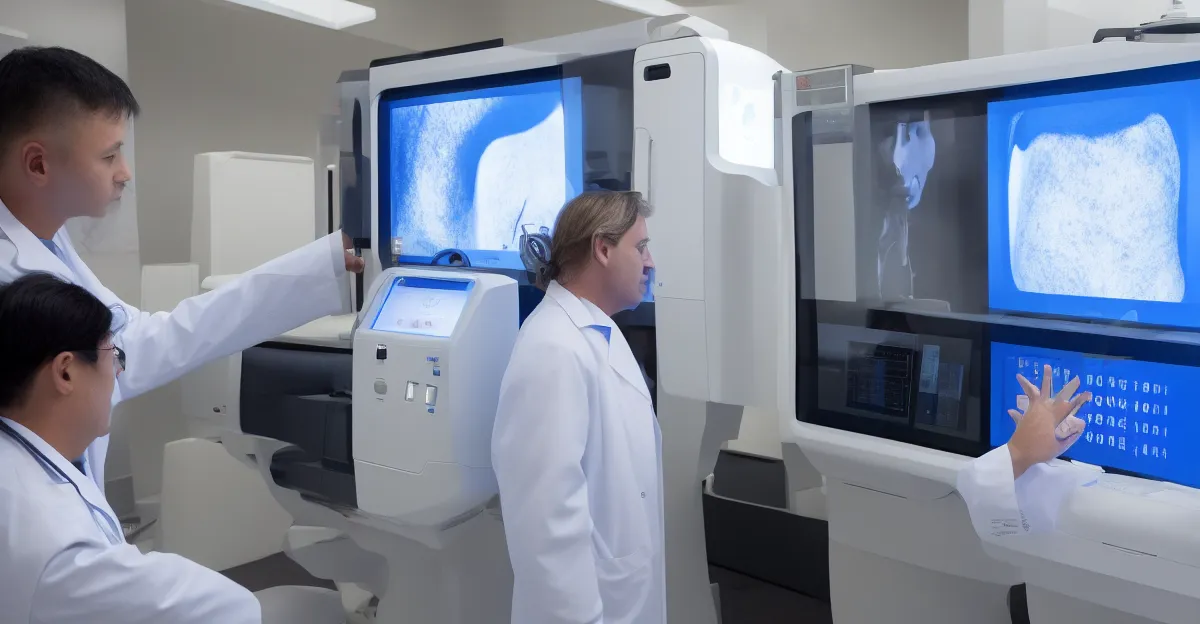
- AI can quickly review scans like X-rays or MRIs.
- It compares these images against millions of past cases globally.
- This comparison helps the doctor see patterns that might be too subtle for a tired human eye to catch.
This early detection is truly life-saving. Finding cancer or a serious infection at Stage 0 instead of Stage 3 changes everything about the patient’s prognosis.
What This Means for You and Your Loved Ones
If you are worried about your health, or the health of someone dear to you, how does this complex technology actually affect your day-to-day life?
It starts with diagnosis. Diagnosis is the map of the problem. If the map is wrong, all treatments will be wasted effort.
AI is incredible at pattern recognition. It sees the tiny flags in biological data that indicate danger long before symptoms become obvious.
- Radiology screening. AI helps check scans for tiny nodules or lesions.
- Pathology analysis. It speeds up the microscopic examination of tissue samples.
- Predictive modeling. AI can predict a patient’s risk of developing complications like sepsis or heart failure.
Think of it like having a super-powered, tireless assistant who has seen every medical textbook and case study in human history. That is what AI brings to the diagnostic table.
The Power of Personalized Treatment
Medicine used to be quite generalized. We often treat the disease, not necessarily the specific person with the disease.
But now, AI allows for truly personalized medicine. It tailors the treatment plan based on individual genetic makeup and lifestyle factors.
- Drug discovery. AI simulates how different drugs might react with a patient’s specific body chemistry.
- Dosage adjustment. It helps fine-tune medicine dosages based on how quickly a patient metabolizes the drug.
- Treatment planning. For complex conditions like cancer, it suggests which combination of radiation and chemo will work best for that tumor.
This level of precision minimizes side effects. It also maximizes the chance of successful recovery.
Practical Steps You Can Take Now
So, as a regular reader trying to keep up with this fast pace of technology, what can I actually do? Do I need a medical degree to care about this?
Yes, you do. You need to be an informed patient advocate for yourself and your family members.
- Stay curious about your health data. Understand what tests you are undergoing.
- Communicate clearly with your doctor. Don’t be afraid to ask follow-up questions about the diagnosis.
- Be open to modern approaches. If your doctor mentions integrating advanced imaging or data analysis, it might be worth discussing it.
AI is a tool, not a magic wand. Your human doctor is the expert wielding that tool.
However, recognizing the power of data is key. When you see an X-ray or a blood report, understand that these images are data points waiting to be analyzed.
AI and the Nepali Healthcare Ecosystem
The biggest hurdle for us in Nepal is often scalability and infrastructure. We cannot afford to wait until AI arrives fully formed from Silicon Valley.
We must adapt these global tools to local realities. This means developing localized AI models that understand our specific genetic profiles and common endemic diseases.
- Telemedicine enhancement. AI can analyze patient inputs gathered through remote devices, allowing a doctor in Kathmandu to assist a patient in a hilly village.
- Disease surveillance. AI can monitor disease outbreaks in real time using data from different clinics across the country. This helps control epidemics much faster.
- Resource optimization. In resource-scarce environments, AI can help prioritize which patients need immediate attention and which ones can wait safely.
Think about the sheer volume of data generated in a country like ours. It is massive, but it has been difficult to process efficiently until now.
AI gives us the organizational brainpower to make sense of this data. It helps us move from reactive treatment to proactive prevention.
Tools and Resources to Start Thinking About
While most advanced medical AI is behind hospital walls for now, there are entry points we can explore regarding digital health.
- Wearable devices. Smartwatches and fitness trackers use algorithms, a form of AI, to track heart rate variability and sleep patterns. This is your first line of health data collection.
- Online symptom checkers. Many trusted apps use AI to guide you on potential issues, though always confirm a serious diagnosis with a professional.
- Digital health records. The push for secure digital patient files is massive. If we organize data properly, AI can make it incredibly powerful.
These technologies teach us about the value of data. They make us realize that our personal health information is incredibly valuable, and it must be protected.
The shift is happening slowly, deliberately, and sometimes quietly. But its potential to reshape human suffering into recovery is immense.
Final Thoughts on the Future of Healing
The partnership between human skill and artificial intelligence is not a replacement scenario. It is an amplification scenario.
The doctor remains the compassionate guide. AI becomes the ultra-fast, hyper-accurate research partner.
This partnership promises a future where quality healthcare is not just available, but personalized and accessible to everyone.
It is a journey we are all on. And it sounds like the most hopeful chapter in modern medicine.
Follow KhulaPost.com for more tech tips and digital literacy guides.