

Quick Summary
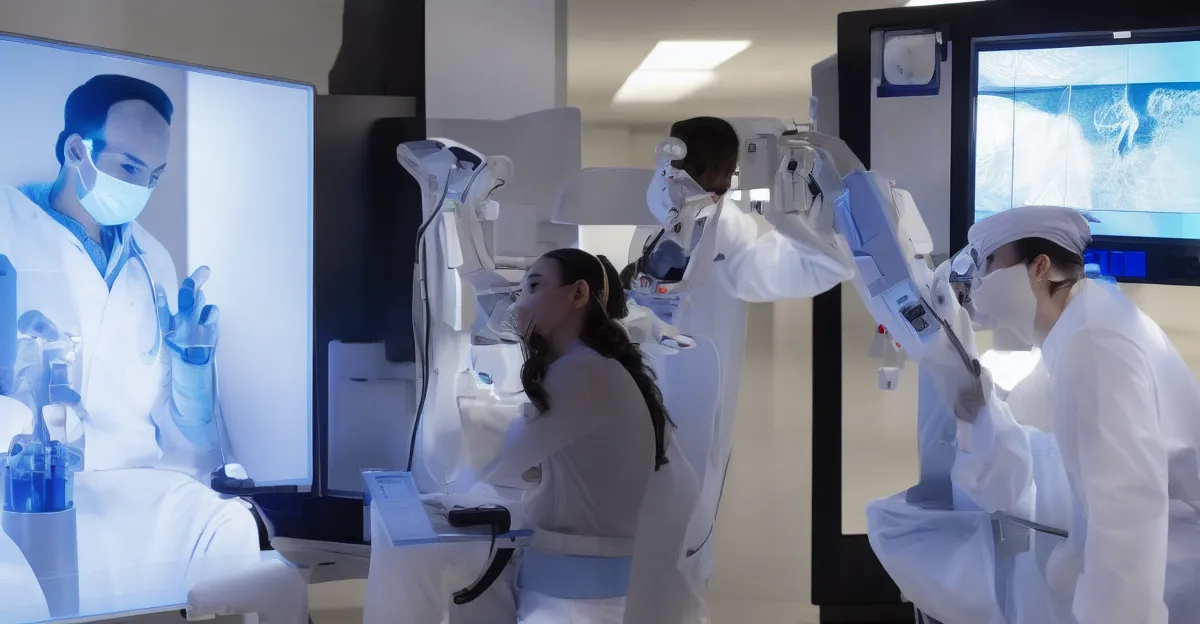
Artificial intelligence is changing how we approach healthcare, offering powerful new ways to keep us healthy. AI tools are becoming incredibly good at spotting problems in scans or monitoring patient data much faster than the human eye alone. This technology helps doctors make quicker and more accurate diagnoses, especially when resources are limited. It is also helping develop personalized treatments for diseases that used to be very difficult to treat. While technology must always be handled with care, AI holds immense promise for improving health outcomes here in Nepal and globally.
AI in Healthcare: How Artificial Intelligence Is Saving Lives
Namaskar, my friends. If you follow this page, you know we always talk about how technology enters our daily lives. But there is one area where tech changes everything, and that is healthcare. When we talk about saving lives, the stakes are incredibly high. We are not just talking about fancy gadgets anymore; we are talking about a fundamental shift in how sickness is treated and prevented.
For many of us growing up here in Nepal, accessing specialized medical care is often a big challenge. You might have to travel far away or wait months just to see an expert. This difficulty is a reality for many families we know.
Enter Artificial Intelligence, or AI. It sounds like something from a movie, perhaps. But in reality, AI is becoming a quiet partner to doctors and nurses right now. It is a tool that brings superpowers into the medical setting, helping overcome geographical distances and shortages of experts.
I want to explain this not just as a high-level concept, but in plain Nepali language. We are going to look at how these complex algorithms are actually making life safer and healthier for everyone.
What This Means for You
When people hear “AI in medicine,” they sometimes picture robots performing surgery. While that sounds futuristic, the reality is often much simpler and more collaborative. AI is mostly about pattern recognition, which is really just advanced computer matching.
Think about it this way. A doctor spends years learning to spot the tiny differences in a photograph, like an X-ray or an MRI scan. They are training their eyes to see the bad guys.
An AI system can be trained on millions of these images, examples of both healthy tissue and cancerous growth. It learns those same patterns but at unimaginable speed.
So, when a new scan comes in, the AI does not replace the doctor. Instead, it acts like a hyper-fast second opinion. It flags potential issues immediately. This allows the human doctor to focus their valuable time on confirming the diagnosis and treating the patient.
This speed is what truly matters when lives are on the line. Waiting even a few extra days for a difficult diagnosis can sometimes be the difference between recovery and much worse outcomes.
AI is also huge in early detection. Think about diseases like diabetes or certain kinds of eye conditions that can lead to blindness if not caught early. These problems often have subtle, slow-moving indicators.
AI algorithms can monitor blood sugar trends or retinal images and pick up on those extremely minor shifts long before a human might notice them during a routine checkup.
It is like having a digital netherbrain constantly watching over your health data, making sure nothing escapes detection.
Another major area is in drug discovery. Finding a cure or even a really effective treatment for a tough disease often takes many, many years and billions of dollars. AI speeds up this initial search dramatically.
It can simulate how different compounds might react within the human body. It tests millions of possibilities on a computer screen, narrowing down the candidates to only the most promising ones for real-world testing.
This cuts down the timeline from decades to possibly just a few years, which is monumental when we are facing global health challenges.
Practical Tips for You
So, how does this massive global technology actually connect to my health in Nepal? It starts with awareness and small actions we can all take.
We need to view technology not as something separate from medicine, but as a kind of modern medical instrument. Just like a stethoscope or a microscope.
Here are some ways you and your family can start thinking about health in this new digital age:
- Maintain your health records digitally. If you are willing to maintain clear, consistent records of your symptoms and test results, these data points become incredibly valuable.
When you combine your personal health data with AI tools, those machines can offer much deeper insights than just a simple appointment might provide.
- Be proactive about screenings. If your doctor suggests a yearly checkup, do not skip it. Early data collection is the most important thing you can provide to any advanced diagnostic tool, AI included.
The more we are proactive about our health, the more powerful AI becomes in helping us stay ahead of illness rather than just reacting to it.
- Educate yourself about your body. You don’t need to become a doctor, but understanding the normal range of vital signs or symptoms for your condition helps you recognize when something feels truly off.
This educated awareness bridges the gap between you and the complex medical processes happening behind the scenes, whether those processes are human or algorithmic.
- Trust your local health providers. As AI tools become available, they are designed to assist the human professional. Never hesitate to ask your doctor about how technology is being used in their treatment plan for you.
Communication between patient, doctor, and technology must always be a balanced conversation.
How This Affects Nepal
Now, let us bring this back home to our beautiful country. The challenges in Nepal are unique, and technology must meet those needs exactly where they are.
One of the biggest issues we face is unequal access to high-level specialists, particularly in rural areas. A brilliant cardiac surgeon might be available only in Kathmandu.
AI, combined with improved internet connectivity and telemedicine infrastructure, offers a potential equalizer. It allows the eyes of an AI expert to review scans taken in a remote village clinic.
Imagine a community health worker taking an ultrasound picture of a patient in a hilly region. If they upload that image to a secure cloud platform, an AI system can triage it instantly.
The AI could flag potential blockages or severe issues within minutes. This doesn’t replace the need for referral, but it buys precious time for local health workers to stabilize the patient and arrange transport.
This ability to bridge the distance gap is perhaps AI’s most powerful gift to developing nations like ours.
Consider the predictable patterns of certain infectious diseases that circulate in our climate. AI models can be trained on regional data to predict outbreaks before they become epidemics.
- By predicting where and when disease clusters might form, health departments can move from a reactive mode to a proactive prevention mode. This saves resources and countless lives.
Furthermore, in primary health centers where diagnosis relies heavily on the experience of a young doctor or nurse, AI acts as an invaluable mentor. It provides immediate support and suggests differential diagnoses based on observed symptoms.
This drastically boosts the capability of frontline health workers, turning them into highly effective initial screening agents.
We are not replacing the human touch in medicine. We are giving local heroes—our primary health workers—the most advanced global partner imaginable.
Tools and Resources to Try
If you are interested in seeing this technology firsthand, there are projects underway globally that demonstrate AI’s potential. While you may not be running a hospital, understanding these tools is important for advocacy.
Many startups are working on low-cost AI diagnostic aids. These tools often use mobile phone cameras and cloud processing power to deliver incredible service.
- Mobile Microscopy Apps. Certain apps allow users to take pictures of samples under a basic microscope and use AI to help identify parasites or bacterial infections. This is huge for diagnosing common but severe ailments in underserved areas.
These apps are essentially giving immediate, high-level help to field researchers and local health workers alike.
- Telehealth Platforms. While not strictly AI, the most advanced telehealth platforms are integrating machine learning elements to analyze video consultations and monitor patient vitals remotely. This allows specialists in the city to oversee patients in the mountains.
This combination of physical presence and digital data is the modern version of bringing a specialist to your village.
- Global Disease Surveillance Projects. Think of the global organizations that track disease patterns. They use AI to analyze travel data, social media trends, and clinic reports simultaneously. This early warning system is how we prepare for the next public health challenge effectively.
These projects are showing us the blueprint for a healthier, more digitally connected future where no patient is too far away to receive expert help.
The path forward requires smart investment in both hardware and, perhaps more importantly, digital literacy among our healthcare workers.
Final Thoughts
To conclude, AI is not a magic wand. It is an incredibly powerful magnifying glass and a tireless assistant.
Its success in healthcare depends entirely on how we choose to wield it. If used thoughtfully, responsibly, and always under the guidance of human medical expertise, its potential to save lives is truly limitless.
For us in Nepal, embracing this technology means accepting a partnership. It is a bond between ancient human dedication to healing and the cutting-edge power of modern computation.
We must move forward with hope, but also with caution. We need policies and infrastructure that welcome these powerful digital helpers while upholding the dignity and judgment of our wonderful doctors and nurses.
The future of health is collaborative. It is the human heart, guided by technological intelligence, that provides the ultimate cure.
Thank you for reading, my friends. Let us continue this important conversation about how we can use tech to build a healthier Nepal for everyone.
Follow KhulaPost.com for more tech tips and digital literacy guides.